
iPassBall dreamed of a solution that would help every budding Zidane and Mbappé improve the quality and accuracy of their “control and pass”. The Cyber-Physical Systems team was tasked with developing a training solution based on embedded technologies.
Basically, the iPassBall works like darts: you have to hit 2 main targets to get the highest score. But you also have to be quick and skillful! The further away the player and the more accurate the shot, the shorter the recovery time and the more shots they get.
The idea may sound simple, but building it is a real challenge: this electronics-packed equipment must be both technologically and physically robust to calculate the accuracy, power and distance of each shot.
After reviewing the state of the art in impact detection and distance measurement, CATIE built a mock-up integrating electronics and software based on our 6TRON technology building blocks.
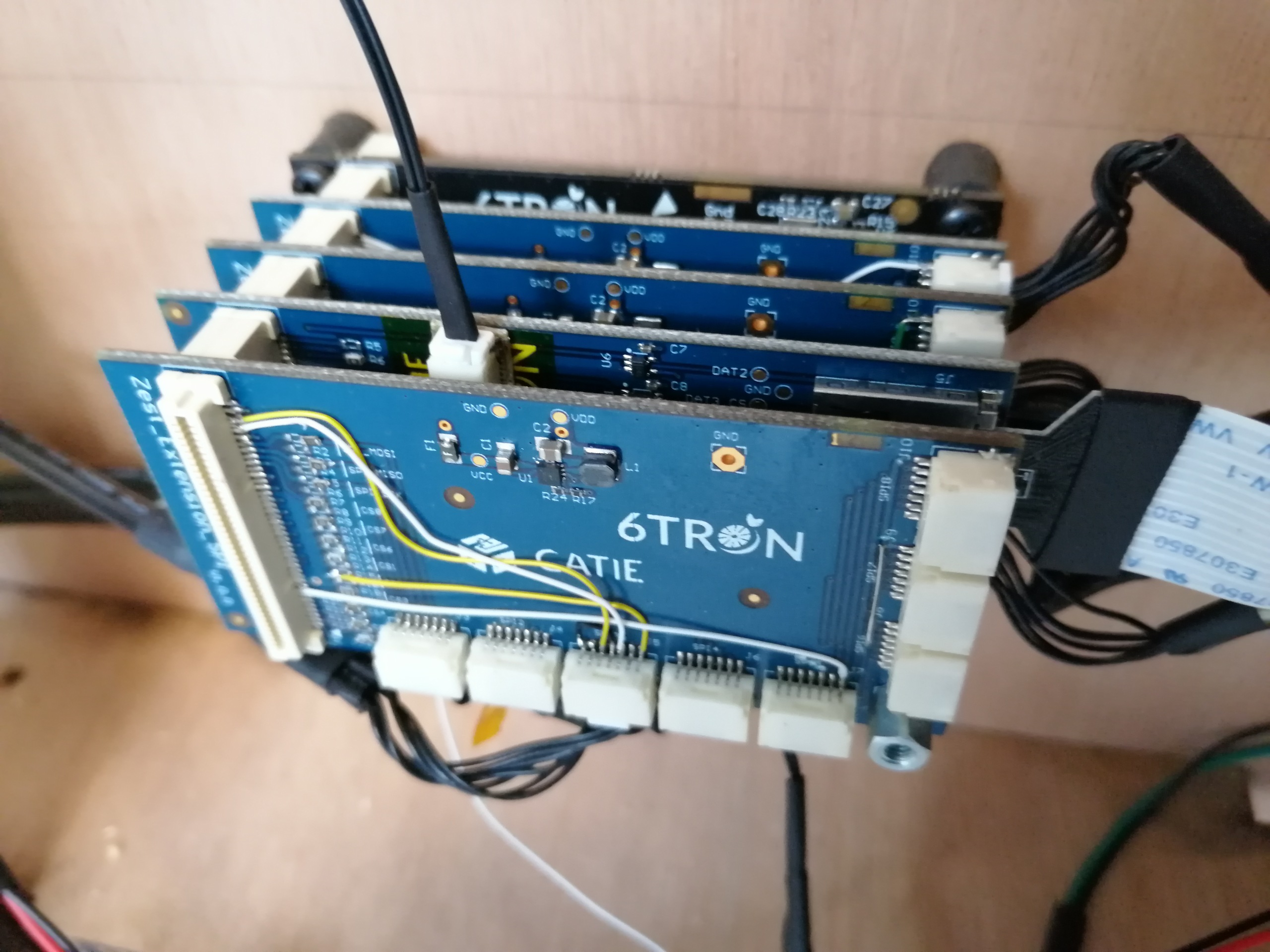
The targets are mounted at the front of the structure, with impact sensors on their back to calculate shot power. The player wears a battery-powered device that locates them and determines their distance from the target.
Data from the sensors is processed in real time to determine which target was hit. Player names, points and the countdown are shown on the display.
All data is stored on an SD card and processed to track player progress. The card is also used to set game parameters (duration, number of players, difficulty). Eventually, a Bluetooth link will allow a mobile or tablet app to be used, via another 6TRON board.
The game board can run on mains power for indoor training or on a lead battery for outdoor sessions. Several boards can also be networked to make it harder.
Enough to get our young (and not so young) players ready for 2022?
Based on the concept I presented to Olivier and Julien, they first reviewed the electronic components that could meet the constraints set out in the specifications.
This review helped me choose the electronic components so they could start building the mock-up. From there, they went beyond their own field, creating the 3D model of the casing and then building it.
They then showed great investigative spirit, not only solving difficulties with communication between components and signal processing disturbed by game conditions, but also integrating new components on the market. On the management side, Sébastien put the necessary resources and priorities in place to achieve the expected result despite the difficulties.